Pay in installments of $5.43 with
 ,
,
 and
and

Shipping Estimate
USA
- USA
- CAN
- USA
- CAN
Ships within 48 hours · Estimated delivery Jul 3 - Jul 8
 Promo Codes Available:
For Your Every Summer RSVP, with Code: SUMMER15
Description
jelly palm plant Jelly Palm Butia capitata 10 Seeds – R&B FloridaseedsButia capitata, commonly known as the Pindo palm or jelly palm, is a species of palm tree native to South America, particularly Brazil, Uruguay, and Argentina. Here's a detailed description: Appearance: Pindo palm is a medium sized palm tree that typically reaches heights of 3 to 6 meters (10 to 20 feet), although some specimens may grow taller under optimal conditions. It has a single, stout trunk that is typically covered in old leaf bases, giving
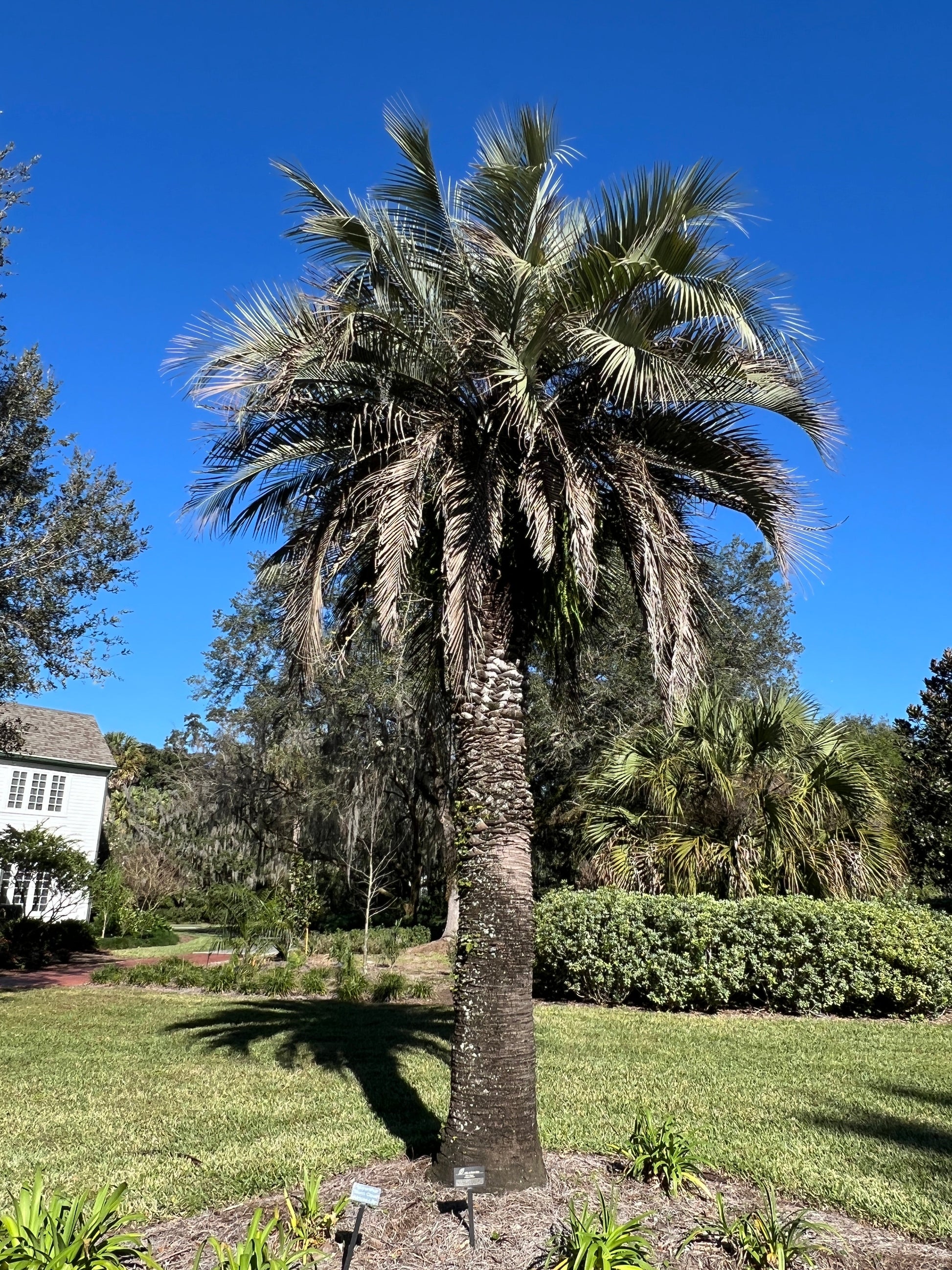
Butia capitata, commonly known as the Pindo palm or jelly palm, is a species of palm tree native to South America, particularly Brazil, Uruguay, and Argentina. Here's a detailed description:
Appearance:
Pindo palm is a medium-sized palm tree that typically reaches heights of 3 to 6 meters (10 to 20 feet), although some specimens may grow taller under optimal conditions.
It has a single, stout trunk that is typically covered in old leaf bases, giving it a rough and textured appearance.
The trunk is topped by a crown of gracefully arching, feather-like fronds.
The fronds are pinnate (feather-shaped) and can reach lengths of up to 3 meters (10 feet). They are composed of numerous leaflets arranged along a central axis.
Fruit:
One of the most distinctive features of the Pindo palm is its large, spherical fruit, which resembles a small yellow-orange plum or apricot.
The fruit is edible and has a sweet, tangy flavor, often compared to that of pineapple or mango.
It is sometimes used to make jelly, hence the common name "jelly palm."
The fruit typically ripens in late summer to early fall and is often produced in abundance, attracting wildlife such as birds and mammals.
Habitat and Cultivation:
Pindo palm is well-adapted to a variety of climates and soil types, making it a popular choice for landscaping in subtropical and Mediterranean climates.
It prefers well-drained soil and full sun but can tolerate some shade and occasional drought once established.
The tree is relatively cold-hardy compared to other palm species and can withstand temperatures as low as 15°F (-9°C) for short periods.
Landscape Uses:
Pindo palm is widely cultivated as an ornamental tree in gardens, parks, and streetscapes, particularly in regions with mild winters.
It is valued for its attractive, tropical appearance, as well as its low maintenance requirements and tolerance of urban conditions.
The tree is often used as a focal point in landscapes, planted in groups for screening or windbreaks, or used to line streets and driveways. Hardy in zones 8-11.
Shipping Notes
- Free Standard Shipping on $100+ Orders to the USA.
- Except Preorder products are shipped in 48 hours.
- Delivery to the USA:
- Standard Shipping : 3-10 business days
- If time is of the essence, please consider selecting expedited delivery for faster service.
Exchange/Return Notes
- We offer a 30-day return/exchange service after receiving.
- Final sale items are not eligible for returns or exchanges.
- To process your return/exchange, please contact us at [email protected]
- Please click here for more details>>> Return & Exchange Policy